
We've Got Your Back Set Up Your Free Consultation
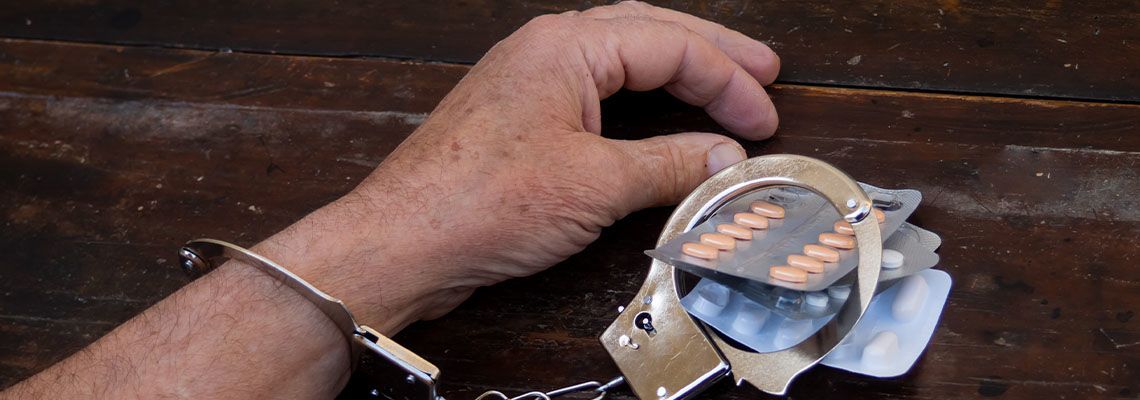
What Happens if You’re Caught With Prescription Drugs Without a Prescription?
Being found with prescription medication that isn't prescribed to you can turn into a criminal case quickly. What feels like a minor misunderstanding can raise questions about where the pills came from, who they belong to, and whether there's proof of lawful possession.
If law enforcement thinks the medication is a controlled substance and you can't show a valid prescription, you may face allegations that carry lasting consequences. The outcome often depends on details that aren't obvious at the moment.
These details include how the medication was stored, what was said during the encounter, and whether the police had a lawful basis for the stop and any search. Getting clear on how these cases are evaluated is an important first step before making decisions that could affect your rights.
For people in Pennsylvania dealing with this situation, Rapa Law Office, P.C. provides defense-focused guidance when prescription drug possession becomes a legal problem. Get in touch with our firm for legal support in Allentown, Lehighton, Palmerton, Jim Thorpe, Bethlehem, Walnutport, Northampton, and Slatington.
How Prescription Drug Possession Becomes a Criminal Issue
Prescription drugs can be lawful when they're used and possessed under a valid prescription, but that permission doesn't automatically extend to someone else. Sharing pills with a friend or family member, carrying medication outside its labeled container, or holding onto old medication can lead to suspicion even when you didn't intend to break the law.
In many situations, the issue isn't whether the medication has a medical use, but whether you had legal authority to possess it. This is also why paperwork and packaging matter.
A pharmacy label with your name, a current prescription record, or a doctor-confirmed medication history can help clarify ownership, but you may not have those items available at the time of a stop. When the situation begins with uncertainty, law enforcement may proceed as if the possession is unlawful, which often sets the stage for how these cases begin.
Situations That Commonly Lead to Charges
Cases on prescription drugs often start during everyday events rather than targeted drug investigations. The key issue is usually what officers see, what they seize, and whether you can immediately show that the medication is yours. The following situations often lead to allegations of unlawful possession of prescription drugs:
Medication carried outside the original bottle: Loose pills in a pocket, bag, or pill organizer can create questions about what the pills are and who they belong to.
A bottle with someone else's name on the label: Even if a family member gave you the medication, that label may be treated as evidence that it wasn't prescribed to you.
Traffic stops with a search of the vehicle: Prescription drugs found in a console, glove box, or backpack can become the focus if an officer claims a basis to search.
Calls for service or welfare checks: Officers may see medication during a home visit and start asking questions about lawful possession.
Security screenings or workplace incidents: Medication discovered during a screening, workplace dispute, or medical event can be reported and investigated.
How the police reached the medication matters, as does what was said before and after it was found. Those details can affect whether the evidence can be used and what charges are even available. Once the encounter has turned into an investigation, the next question is what the prosecution will try to prove in court.
What The Commonwealth May Need to Prove
A conviction generally requires more than the presence of pills. Prosecutors often have to connect you to the substance, show it was a controlled prescription drug, and show that you didn't have lawful authority to possess it. The specific points can vary, but the case often centers on a set of practical questions like these:
Identity of the substance: The prosecution may rely on testing, pill identification, or other proof that the medication is a controlled substance.
Knowing possession: The focus is often on whether you knew the pills were present and had control over them, not just whether they were nearby.
Lack of a valid prescription: The prosecution may argue there's no lawful authorization for you to possess that medication.
Connection to the location where pills were found: If pills were found in a car or shared space, the issue can become who had access and control.
Statements and conduct during the encounter: What you said, how you explained ownership, and what officers observed may be used to support their theory.
These proof issues also shape charging decisions. If officers think the amount, packaging, or surrounding circumstances suggest something more than personal possession, the case can expand quickly. That leads to the types of charges that are filed when prescription drugs are involved.
Potential Charges That Can Be Filed
Prescription drug allegations don't always stop at a single count for possession. Depending on the substance, the amount, and what the police think you planned to do with it, charges may range from lower-level offenses to more serious felony allegations. The following charges are commonly associated with cases centered on prescription drugs:
Simple possession of a controlled substance: This charge focuses on possessing a controlled prescription drug without lawful authorization.
Possession with intent to deliver: If police claim the facts suggest distribution, the case may shift toward an intent-based charge rather than personal use.
Possession of drug paraphernalia: Items tied to storing, using, or distributing drugs may be charged separately depending on the circumstances.
Obtaining medication by fraud or deception: Allegations involving forged prescriptions, altered labels, or misrepresentation can add separate counts.
Driving-related offenses tied to impairment: If the stop involved suspected impairment, drug-related driving charges may be filed in addition to possession allegations.
Each charge has different elements, defenses, and potential consequences, which is why the wording in the criminal complaint matters. With charges in place, it's helpful to know what the process can look like after an arrest or citation.
What Happens After an Arrest or Citation
Some drug charge cases begin with an arrest, while others begin with a citation or a summons to appear in court. After an arrest, there’s the matter of booking and then appearing before a judge for bail decisions, including conditions such as travel limits or no-contact terms.
The early stages can move quickly, and it's easy to miss how much later litigation is shaped by what happens in the first days. After the case is filed, there may be a preliminary hearing where the court reviews whether there's enough evidence to move forward.
Contact an Experienced Attorney Today
Charges on prescription drugs can affect employment, licensing, and future court exposure, so it's worth treating the situation seriously from the start. Our attorneys at Rapa Law Office, P.C., in Pennsylvania, can review the facts, evaluate the evidence, and explain options based on what the Commonwealth must prove.
At Rapa Law Office, P.C., we serve clients in Allentown, Lehighton, Palmerton, Jim Thorpe, Bethlehem, Walnutport, Northampton, and Slatington. If you're facing prescription drug allegations, contact our office to discuss next steps.